
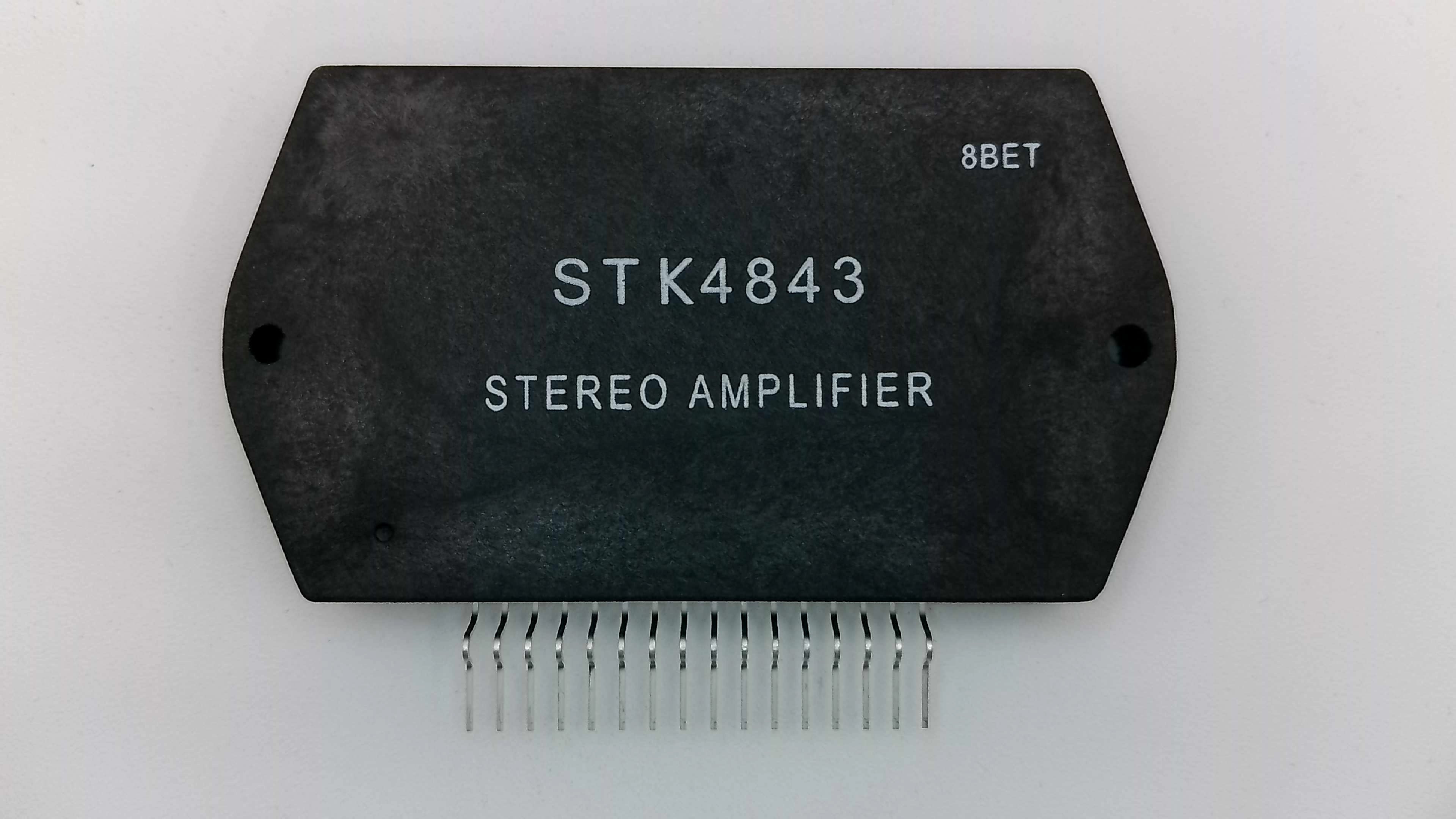

Description
High-Fidelity 30W+30W Dual-Channel Stereo Power Amplifier Module
The STK4843 is a sophisticated thick-film hybrid integrated circuit from Sanyo's high-performance audio lineup. Delivering a continuous 30 Watts per channel, this 16-pin module is a staple in premium Hi-Fi mini-components, bookshelf stereos, and multi-channel home theater receivers. It is engineered for audiophiles who demand a layered, rich soundstage with minimal background noise.
Utilizing a dual-supply (split rail) architecture, the STK4843 allows for a direct-coupled output, eliminating large DC-blocking capacitors for improved low-frequency response and tighter bass. With a remarkably low Total Harmonic Distortion (THD) and a high signal-to-noise ratio of 105dB, it is the perfect replacement part for high-precision audio restorations.
Key Technical Features:
- Continuous Power Output: 30W + 30W (at 8Ω, THD = 0.08% typical).
- Configuration: 2-Channel Stereo in a standard 16-Pin SIP (Single In-line Package).
- Dual-Supply Architecture: Operates on split rails (e.g., ±24V to ±35V) for superior audio clarity.
- High Fidelity: 105dB Signal-to-Noise ratio for crystal-clear output.
- Frequency Response: Wide bandwidth from 20Hz to 50kHz (+0, -3dB).
- Thermal Reliability: Built on Sanyo's proprietary IMST substrate for high-efficiency heat transfer.
Installation & Safety Guide:
As a high-fidelity power module, the STK4843 generates significant thermal energy. It must be securely bolted to a clean, flat heatsink using a fresh layer of high-quality thermal silicone grease. Operating this module without a proper heatsink—even for a brief functional test—will cause immediate and permanent internal substrate failure.
Technician's Note: Before installing, ensure that your VCC+ and VCC- rails are symmetrical and discharge all filter capacitors. We highly recommend checking the output Zobel network (resistor/capacitor) and emitter resistors, as these components often fail when the original module shorts, which can damage your new replacement.